



The Wallah Silver Project is located ~35km north of the regional centre, Yass, in south central NSW, Australia and within the mineral-rich Lachlan Fold Belt. Historic mining occurred at the Walla Walla Silver-Lead Mine, with reported production of high-grade silver and lead between 1888 and 1919. Historical production figures are based on publicly available records and have not been independently verified by the Company.
The project is highly prospective for silver mineralisation. Modern exploration targeting tin and then silver defined an extensive vein-alteration-gossan system. Approximately 10km of mapped vein-alteration zones remain to be drill tested. A resurgent silver price has reinvigorated focus on this highly prospective area.
Highlights from recent drilling (NAE: 2026)
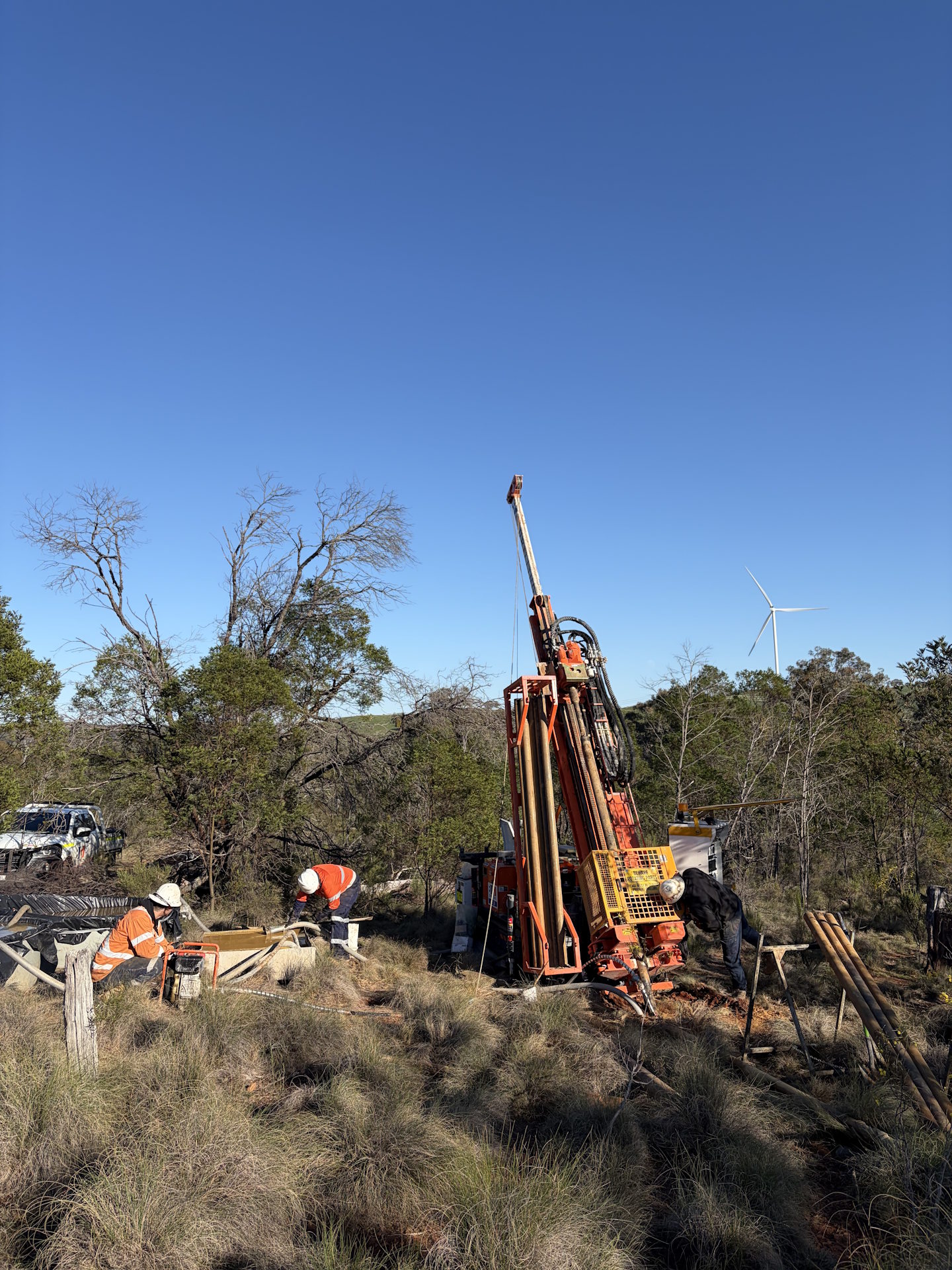
- Phase 1 (2026) drilling has been completed at NAE’s 100%-owned Wallah Silver Project (EL9610) in south-central NSW
- One hole completed for a total of 225.70m, comprising a 91.53m pre-collar (WWRC010) and a 134.17m diamond tail (WWDT010)
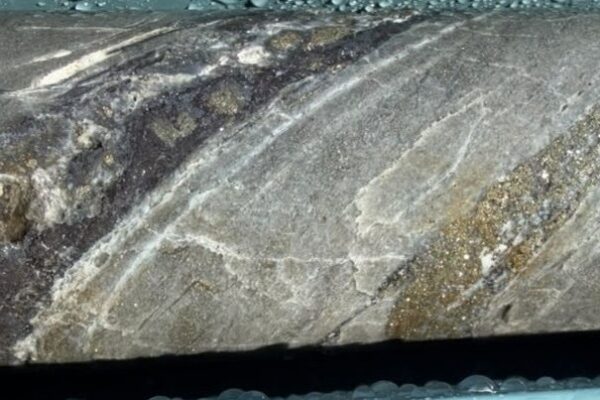
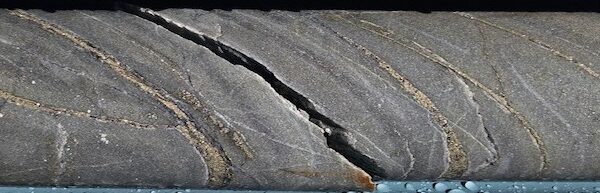
- Visual logging of the diamond core shows the hole intersected a wide zone of alteration and sulphide mineralisation:
- Intense alteration logged over more than 100m (ETW¹) – more than triple the previously known width2
- Veining logged throughout the entire cored interval, including five new sub-vertical sheeted vein sets, 1.55 to 10.50m wide (apparent3) and 5.5 to 22.0m apart (apparent)
- Multiple vein styles logged, including veins, veinlets, breccia and stockwork
- Sulphides logged include pyrite (up to 10% in sections), sphalerite (up to 10% in sections), galena (2–5% in sections) and minor chalcopyrite4
- Downhole geophysical logging (Heterodyne and induced polarisation) completed, with results expected in Q4 CY26
- Core has been cut, sampled and delivered to the laboratory, with assay results expected during Q4 CY26
¹ ETW – estimated true width
² Based on historic drilling; refer to the ASX announcement dated 2 March 2026
³ Apparent width is based on measured depth in drilling
⁴ Visual estimates of sulphide abundance are not a substitute for laboratory analysis. Refer to the Cautionary Statement – Visual Estimates below.
Highlights from previous drilling (2010)
Previous Reverse Circulation (RC) drilling carried out in 2010 by Silver Mines Ltd in JV (2004 – 2016) with Australia Oriental Minerals NL, focused on the historic Walla Walla Silver-Lead Mine. Drilling by Silver Mines Ltd (9 holes for 962m) intersected narrow-vein-style mineralisation up to 2.5m wide over a strike length of 350m. Mineralisation remains open to the north, south, and down-dip.
Table 1: Selected drilling results from the Wallah Project, NSW
| Hole ID | From (m) |
To (m) |
Int (m) |
Ag g/t |
Auvg/t | Cu % |
Pb % |
Zn % |
Sn % |
| WWRC001 | 68 | 70 | 2 | 223 | 0.05 | 0.26 | 4.98 | 2.77 | 0.47 |
| WWRC002 | 97 | 98 | 1 | 208 | 0.09 | 0.32 | 2.27 | 4.00 | 0.29 |
| WWRC003 | 74 | 76 | 2 | 109 | 0.13 | 0.13 | 4.68 | 2.57 | 0.18 |
| WWRC004 | 109 | 112 | 3 | 118 | 0.01 | 0.05 | 2.9 | 2.46 | 0.09 |
| WWRC009 | 97 | 98 | 1 | 103 | 0.01 | 0.01 | 1.86 | 0.45 | 0.18 |
Exploration Potential
The Wallah Project is prospective for two types of mineralisation, as follows:
- Intrusion-related silver-rich polymetallic vein and stockwork mineralisation, such as at the historic Walla Walla Silver-Lead Mine.
- Low-grade, bulk tonnage tin cassiterite greisen-related stockwork mineralisation, such as the Kiawarra tin stockwork deposit.
Significant exploration upside exists at Wallah, with less than 10% of the licence area having been systematically explored. NAE intends to carry out a comprehensive, integrated, multi-disciplinary exploration program in 2026, focused on re-processing of historic data, detailed structural mapping, selective rock chip sampling, and close-spaced multi-element soil sampling, leading to drilling.
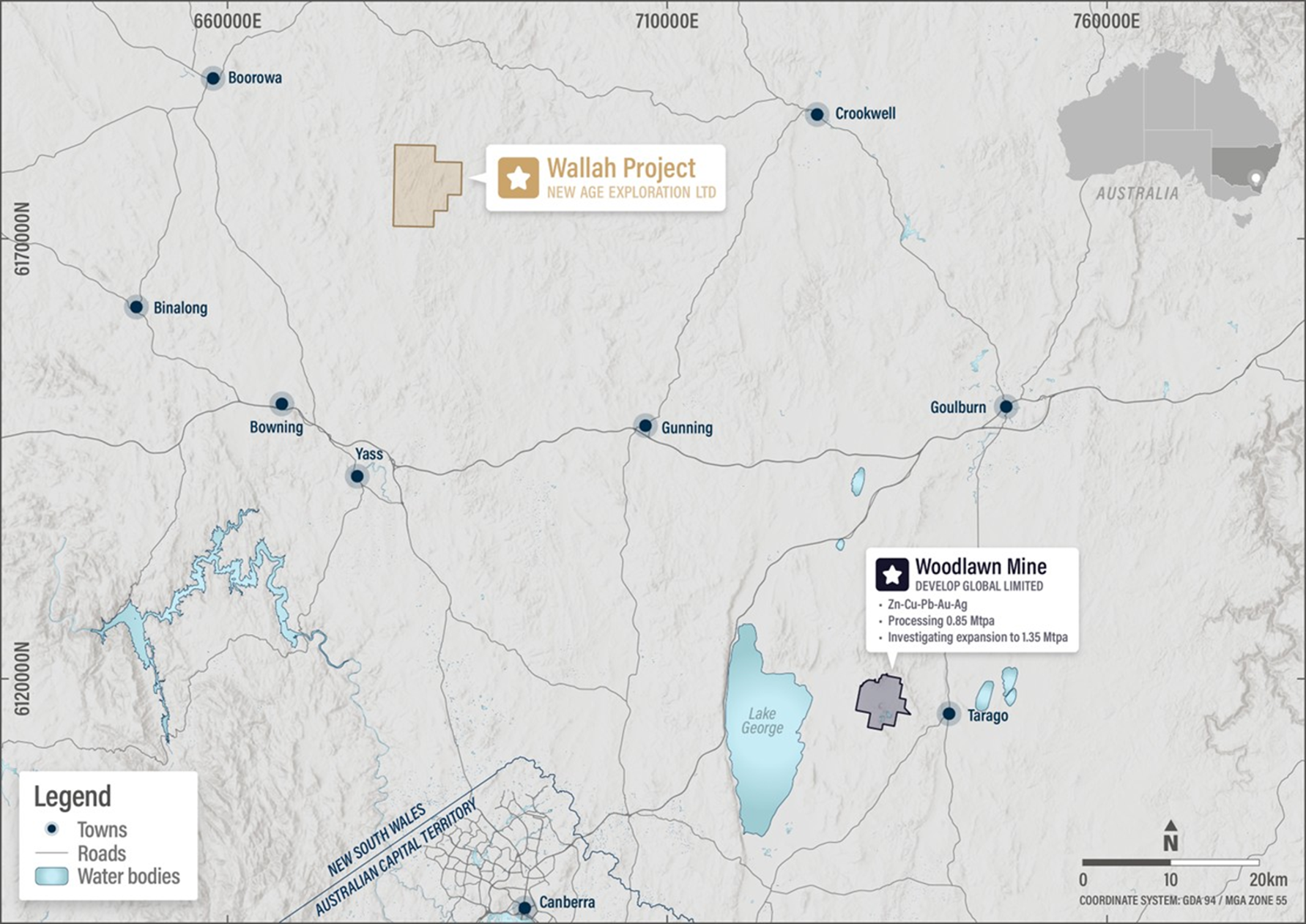
Figure 1: Location of the Wallah Project, NSW
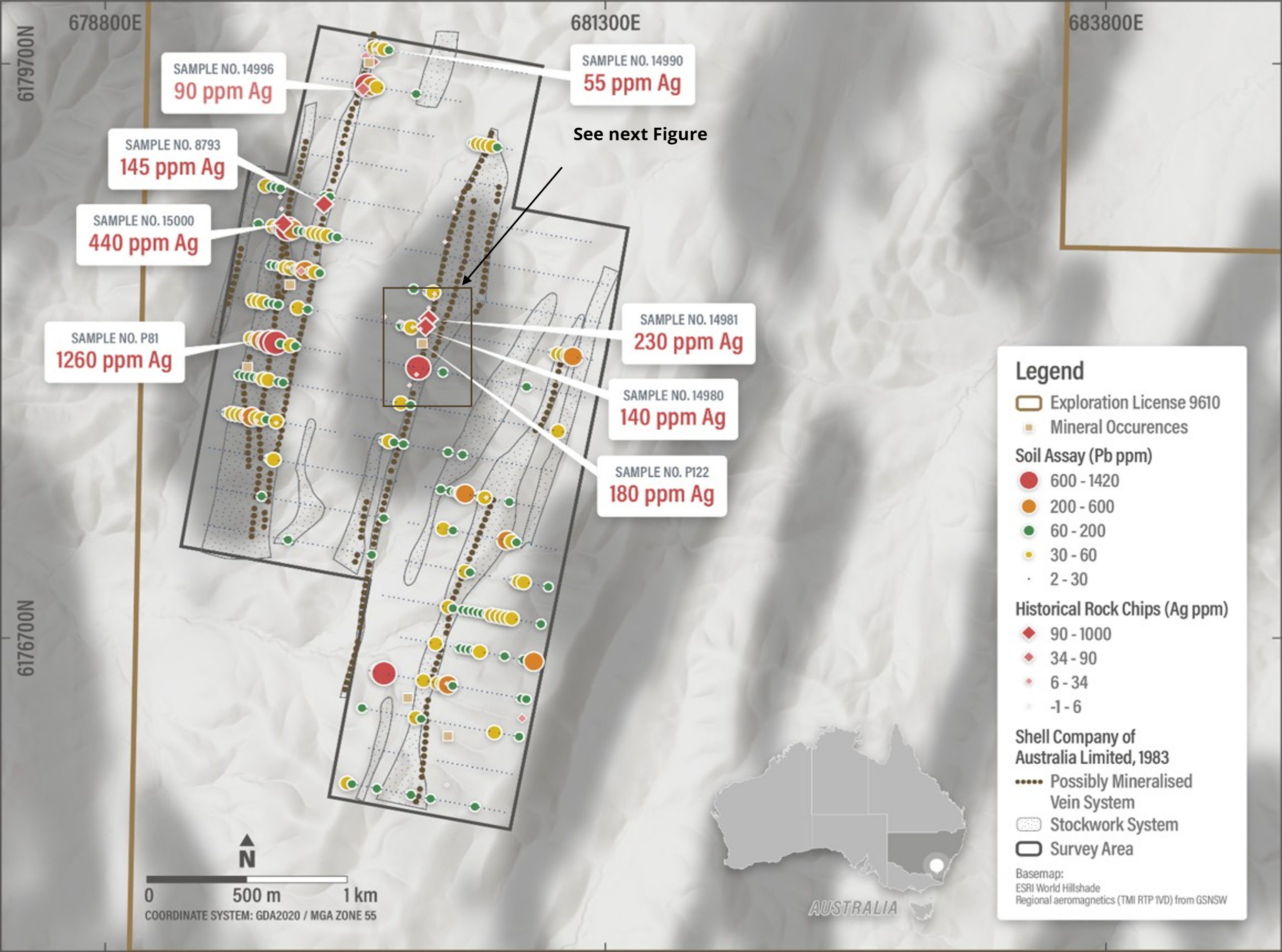
Figure 2: Historic soil survey results (lead, ppm) and rock chip results (silver, ppm) and mapped geology – overlain on aeromagnetic data (1st vertical derivative), Wallah Silver Project, NSW (refer also to the ASX announcement dated 2 March 2026). See box for location of Figure 3.
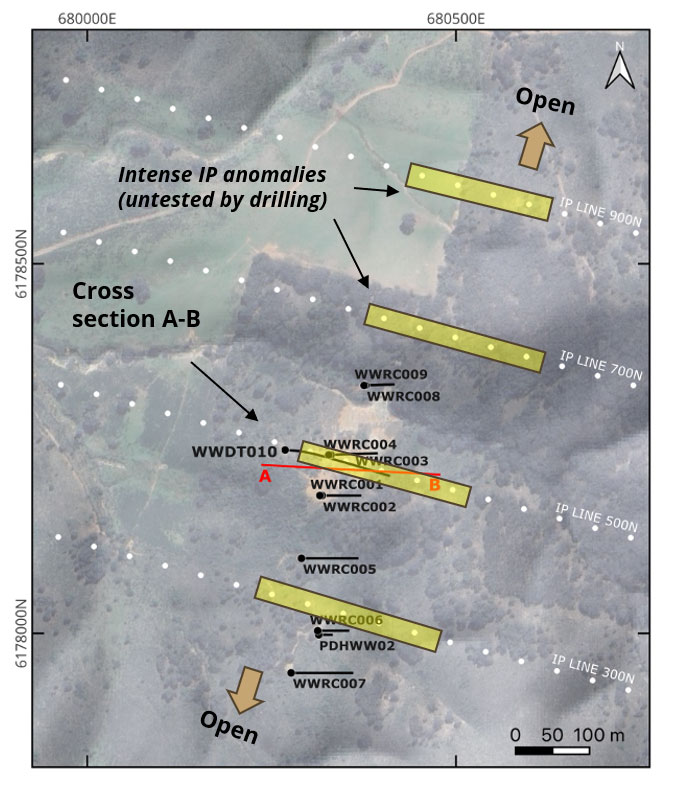
Figure 3: Location of recent drilling on IP Line 500N. Note: Intense IP anomalies on Lines 300N, 700N and 900N are untested by drilling
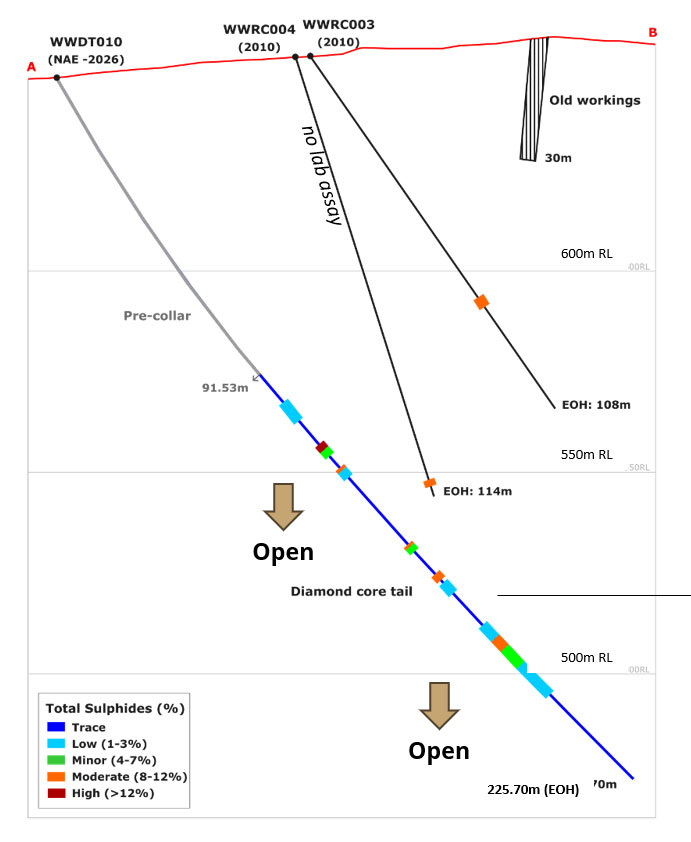
Figure 4: Cross-section through WWRC010/WWDT010 showing logged total sulphides and vein sets